

.png) 3 month_ago
42
3 month_ago
42

With all the media attention on post-pandemic turbo cancer, I have been searching for solutions to get ahead the crisis. Currently cancer screening in the US is limited by guidelines.
- Breast cancerWomen should receive screening mammography every 2 years from ages 40 to 74. [sites.nort…estern.edu]
- Cervical cancerWomen ages 21–65 should be screened with:
- Pap test every 3 years (ages 21–29), or
- HPV testing (alone or combined with Pap) at longer intervals for ages 30–65. [cdc.gov]
- Colorectal cancerAll adults ages 45–75 should be screened using stool-based tests or direct visualization tests (such as colonoscopy), at intervals depending on the method used. [sites.nort…estern.edu]
- Lung cancerAnnual low‑dose CT is recommended for adults ages 50–80 who:
- Have a significant smoking history (≥20 pack‑years), and
- Currently smoke or quit within the past 15 years. [cdc.gov]
- Prostate Cancer
American Cancer Society (Acs) Prostate Cancer Screening Guidance
The ACS recommends earlier initiation of PSA discussions and gives clearer endorsement of testing once an informed discussion has occurred:
- Age 50: Men at average risk with a life expectancy ≥10 years should discuss PSA screening with their clinician
- Age 45: Men at higher risk, including Black men or those with a first‑degree relative diagnosed before age 65
- Age 40: Men at very high risk, such as those with multiple first‑degree relativesaffected at an early age
After this discussion, men who choose screening should receive PSA testing, with screening intervals based on PSA level (e.g., every 1–2 years) [cancer.org]
- Routine screening has not shown a mortality benefit for ovarian, pancreatic, testicular, or thyroid cancers in asymptomatic adults.
- Evidence is insufficient to recommend routine screening for bladder, oral, or skin cancer in people without symptoms. [cdc.gov]
These recommendations apply to average‑risk, asymptomatic adults. Personal or family history, genetic risk, or other conditions may change screening timing or intensity. None of these recommendations consider SARS-CoV-2 infection or COVID-19 vaccination as a new and highly prevalent risk factor for cancer.
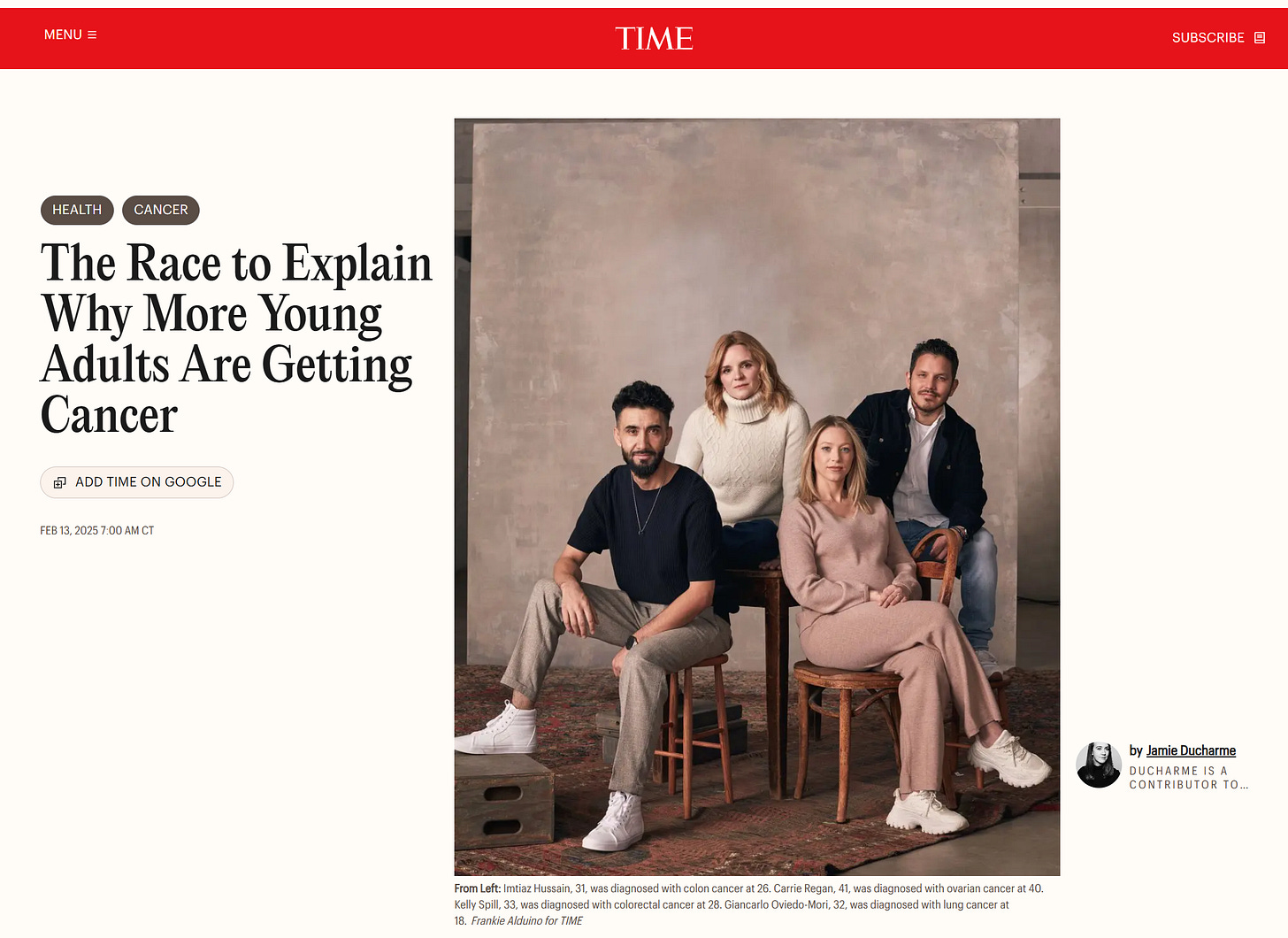
Since 2021, global oncology trends have shifted significantly. Epidemiological data indicates a troubling, unexplained acceleration in cancer diagnoses, particularly among younger, likely COVID-19 vaccinated cohorts who historically presented lower risk profiles. This phenomenon has sparked intense debate regarding potential oncogenicity of genetic vaccines, Spike protein exposure, and other determinants. As the medical establishment struggles to contextualize these shifts, the necessity for proactive, non-invasive, and highly sensitive screening modalities has become a paramount concern for patients seeking to bypass institutional inertia.
.
.
Traditional screening protocols often rely on modality-specific, radiation-heavy diagnostics like CT scans or mammography, which are frequently constrained by anatomical focus and cumulative ionization risks. Whole-Body MRI (WBMRI) has emerged as a disruptive alternative, leveraging magnetic resonance to visualize soft tissue contrast without the deleterious effects of ionizing radiation or the potential toxicity associated with gadolinium-based contrast agents.
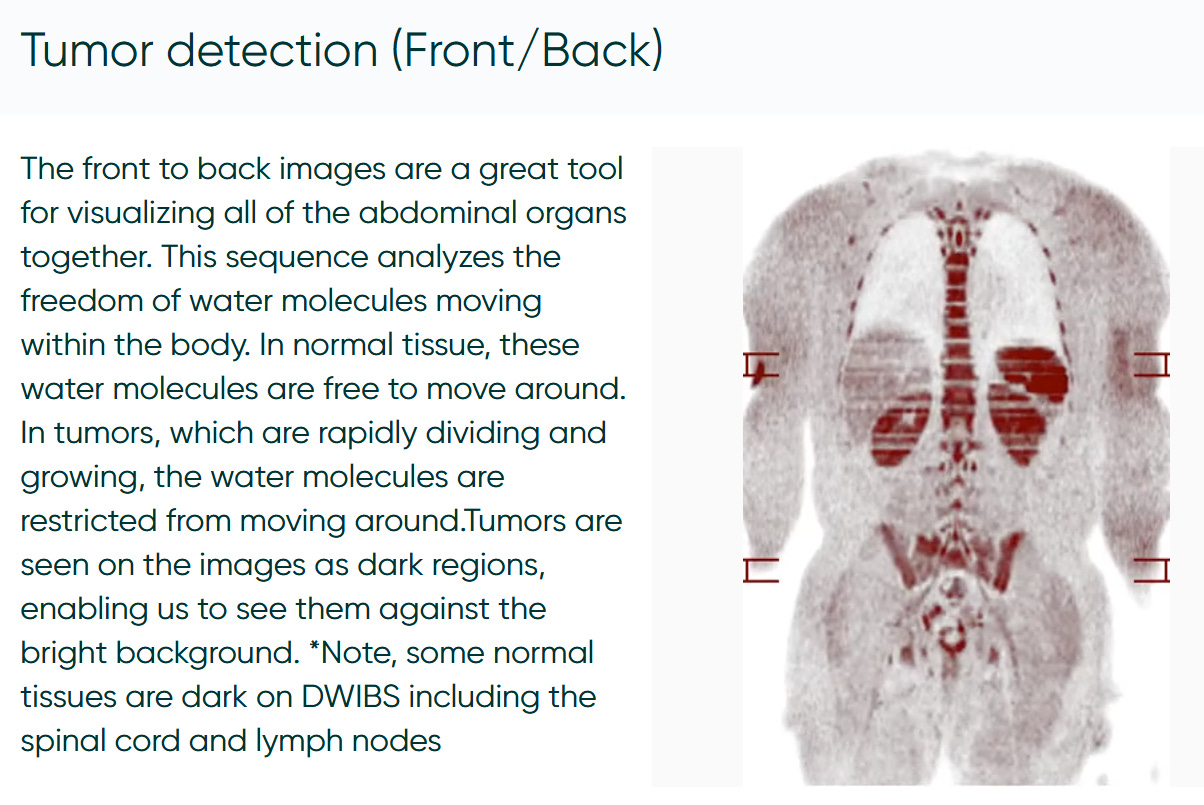
By utilizing advanced diffusion-weighted imaging (DWI), WBMRI probes the microscopic movement of water molecules in cellular structures. Malignant tumors, characterized by high cellular density and restricted water diffusion, often appear hyperintense on DWI sequences. This allows for a functional assessment of the entire body, providing a comprehensive snapshot of potential oncological activity that conventional localized imaging frequently misses.
In the current diagnostic market, Prenuvo has positioned itself as a primary advocate for the democratization of preventative, whole-body imaging. By integrating proprietary MRI protocols with AI-driven insights, Prenuvo facilitates a non-contrast, time-efficient scan that captures a vast dataset across multiple organ systems. Both my wife and myself had Prenuvo scans in 2026 and were impressed with the quality of service and results reporting.
The significance of this approach lies in its proactive baseline establishment. Rather than reacting to symptomatic presentation—which frequently correlates with advanced disease stages—a non-contrast WBMRI strategy allows for the longitudinal monitoring of biological markers. For individuals cognizant of the recent turbo-cancer crisis, such technology represents a critical tool for reclaiming medical agency.
.

.
While the diagnostic potential is profound, the implementation of WBMRI is not without limitations:
- Overdiagnosis: Critics in academic oncology often cite the risk of identifying indolent lesions that might never progress, potentially leading to unnecessary anxiety and iatrogenic harm through excessive follow-up.
- Technical Complexity: WBMRI requires sophisticated hardware and highly specialized radiologic expertise to distinguish benign findings from true pathology, a standard that independent clinical groups like those affiliated with Prenuvo are actively striving to refine.
- Data Management: The sheer volume of data generated per patient necessitates robust AI integration to assist in the identification of subtle anomalies that might otherwise escape human detection using tumor-searching algorithms.
.
.
The rise turbo-cancer incidence requires a departure from traditional, reactive medicine. Non-contrast WBMRI provides a scientifically rigorous pathway for early detection, empowering individuals to monitor their health status with unprecedented clarity. As screening technologies advance, the focus must remain on independent, proactive inquiry that prioritizes the patient’s long-term outcome over rigid, nonprogressive institutional guidelines.
*
Click the share button below to email/forward this article. Follow us on Instagram and X and subscribe to our Telegram Channel. Feel free to repost Global Research articles with proper attribution.
Peter A. McCullough, MD, MPH, President, McCullough Foundation
Featured image source
Global Research is a reader-funded media. We do not accept any funding from corporations or governments. Help us stay afloat. Click the image below to make a one-time or recurring donation.














.jpg)





 French (CA)