

.png) 1 day_ago
7
1 day_ago
7
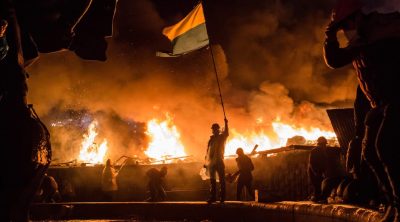
Given that the European Union is constantly escalating the war against Russia in Ukraine, it is worth revisiting its causes.
To read this article in the following languages, click the Translate Website button below the author’s name.
Русский, Hebrew, عربي, Farsi, Español, Portugues, 中文, Français, Deutsch, Italiano, 日本語, 한국어, Türkçe, Српски. And 40 more languages.
In World War I, 3.5 million Ukrainians from Russian-controlled eastern Ukraine fought on the side of Russia, and 250,000 Ukrainians from Austro-Hungarian-controlled western Ukraine fought on the side of Austria-Hungary.
In 2014, during the first phase of the war, Russia occupied western Ukraine and closed Ukrainian schools there. It relied on Russophiles, who began identifying with Russia in 1848 when the population of western Ukraine realized that the Russians were closer to them than the Austrians at a time when the Russian army was marching through Ukraine to aid Austria, which was at war with Hungary. In 1893, due to fears of the growth of Russian power, the most prominent Russophiles were convicted of treason and imprisoned in Austria-Hungaria. When the Russian army retreated from Ukraine in 1915, the Russophiles either left with it or were imprisoned by Austria in a concentration camp, where many of them died.
After the victory of the Bolshevik Revolution in Russia, the Bolsheviks did not succeed in winning Ukraine over to their side until they began distributing land confiscated from the nobility to Ukrainian peasants and promised that Ukraine would join a federation with Bolshevik Russia as a formally independent state with Ukrainian as its official language. At that time, most of the emerging territory of Ukraine was part of Russia, and the Bolsheviks thus ceded it to Western Ukraine in exchange for its promise that the entire territory of Ukraine would remain part of the Soviet Union being formed by Russia.
In February 1920, the Ukrainian Soviet Republic was established, though fighting over its territory continued. In 1919, the victorious powers of World War I recognized Subcarpathian Rus as part of Czechoslovakia, and in 1923, they recognized Volhynia in western Ukraine as part of Poland.
When Germany and the Soviet Union partitioned Poland in 1939, the Soviet Union gained control of a part of Ukraine that had previously been under Polish rule, and it became part of the Ukrainian Soviet Socialist Republic. This marked the first time in history that nearly the entire territory of Ukraine was, at least formally, under the control of a Ukrainian state.
During the German occupation in World War II, the Organization of Ukrainian Patriots established the Ukrainian Insurgent Army in 1942 in western Ukraine, in Volhynia, with up to 100,000 western Ukrainians fighting in its ranks. Its goal was to fight for the creation of an independent Ukrainian state across all territories of the Ukraine established by Russia. In eastern and southern Ukraine, however, Russian was still spoken. At the Organization of Ukrainian Patriots conference in April 1942, the Soviet Union was still considered the greatest enemy, and therefore operations were planned primarily against Soviet partisans on Ukrainian territory. Russian-speaking Ukrainians in the eastern part of Ukraine viewed the Ukrainian Insurgent Army as German collaborators. This reflected the ongoing conflict between historically Austro-Hungarian western Ukraine and historically Russian eastern and southerne Ukraine. Most Ukrainians, especially those in the east (about 6 million, of whom 3 million were killed), fought on the Soviet side during World War II. The Western Ukrainian Liberation Army joined Germany at the end of World War II and adopted German methods of warfare, massacring about 100,000 Poles living in the Volhynia region. It continued its fight against the Soviet Union even after the end of World War II, but was defeated.
(Serhy Yekelchyk, Ukraine: Birth of a modern nation, Oxford university press, 2007, ISBN 978-0-19-530545-6, A History of Ukraine, the Land and Its Peoples, Paul Robert Magocsi, University of Toronto Press Incorporated, 2010, ISBN 978-1-4426-1021-7)
After World War II, the Soviet Union—dominated primarily by Russia—annexed Volhynia and Transcarpathia to Ukraine, and in 1954, Nikita Khrushchev, then First Secretary of the Communist Party of the Soviet Union, also ceded Crimea to Ukraine. The Ukrainian state was thus created largely by Russia, which gradually annexed most of Ukraine’s territory from its own and expected Ukraine to remain in alliance with it in return.
In the summer of 1991, while a coup against Mikhail Gorbachev was underway in the Soviet Union, the Soviet republics took advantage of the weakening of the Soviet Union’s central authority to declare their independence from it—and, in effect, from Russia—and the Ukrainian Soviet Republic also declared its independence. The former Soviet states nevertheless agreed to form the Commonwealth of Independent States, in which they remained linked to Russia.
Image: Viktor Yanukovych
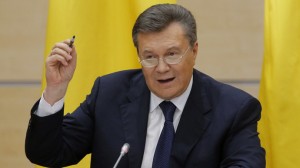
In 2014, protracted demonstrations took place in Kyiv’s Independence Square (Maidan), supported by the West, against Viktor Yanukovych’s Ukrainian government, which had backed away from its plan to join the European Union. These demonstrations ultimately led to the overthrow of the Ukrainian government. The Russian-speaking regions of Ukraine, much like the former member states of the Soviet Union, took advantage of this weakening of central Ukrainian authority to declare their territories’ independence from the Ukrainian government. Crimea, Luhansk, and Donetsk thus rose up against their integration into the European Union and NATO, which is hostile to Russia. This was a repeat of the situation at the end of World War II, when the originally Russian, Russian-speaking, anti-German eastern Ukraine fought against the originally Austro-Hungarian, Ukrainian-speaking, anti-Russian western Ukraine.
The new Ukrainian government was unable to intervene against the Russian-backed uprising of the Crimean population, but it sent the army against the Luhansk and Donetsk rebels, driving them out of parts of the Donetsk and Luhansk regions. With Russian support, the rebels retained control of the rest of the territory. Western Ukraine then launched an unprecedented cultural genocide in the newly occupied Russian-speaking Ukrainian territory, gradually banning the population from speaking Russian . Not even Germany attempted to do this during its occupation of the Czech lands in World War II. This pro-Russian territory was supposed to become part of the European Union and NATO, which were to eventually build military bases there to threaten Russia from close proximity.
In 1997, Ukraine signed a Treaty on Friendship, Cooperation, and Partnership with Russia, in which both parties pledged to respect the territorial integrity of the other and to “refrain from supporting or participating in actions that could threaten the security of the other party (see this). By deciding to join NATO, western and central Ukraine violated this agreement. Russian-speaking Crimea and eastern Ukraine rebelled against this decision, and just as at the end of World War II, a civil war broke out in Ukraine between the pro-Russian east and the pro-Western west of the country
To any reasonable person, it could not have come as a surprise that Russia ultimately opposed Western policies aimed at using pro-Russian regions of Ukraine against it as a military threat. U.S. President Donald Trump also demonstrated this common sense when he attempted to broker a peace agreement between Ukraine and Russia under which the Donetsk and Luhansk regions would be ceded to Russia. However, the European Union, which dreams of expanding its territory eastward and undemocratically is indifferent to the fact that the local population has opposed this, refused to agree to this. The war in Ukraine thus continues solely because the European Union is determined to support the corrupt Ukrainian government with arms shipments (see this), until Russia is defeated and the European Union gains new territories in Eastern Europe, even regardless of the opinion of the majority of the Ukrainian public (see this).
In effect, this has reignited the conflict of World War II, when Germany and Russia fought each other, with the difference that this time it is Russia and the German-led European Union that are at odds. This is certainly not the way to build a safer world, especially at a time when, in addition to nuclear weapons, murderous artificial intelligence has entered the fray and governments are concealing the existence of technologies for remotely controlling human brain activity, which even allow for the remote killing of people, for example by stopping their hearts beat (pg. 250) or their breathing (pg. 254).
*
Click the share button below to email/forward this article. Follow us on Instagram and X and subscribe to our Telegram Channel. Feel free to repost Global Research articles with proper attribution.
Mojmir Babacek was born in 1947 in Prague, Czech Republic. Graduated in 1972 at Charles University in Prague in philosophy and political economy. In 1978 signed the document defending human rights in communist Czechoslovakia „Charter 77“. Since 1981 until 1988 lived in emigration in the USA. Since 1996 he has published articles on different subjects mostly in the Czech and international alternative media.
In 2010, he published a book on the 9/11 attacks in the Czech language. Since the 1990‘s he has been striving to help to achieve the international ban of remote control of the activity of the human nervous system and human minds with the use of neurotechnology.
He is a Research Associate of the Centre for Research on Globalization (CRG).
Global Research is a reader-funded media. We do not accept any funding from corporations or governments. Help us stay afloat. Click the image below to make a one-time or recurring donation.





.jpg)



 French (CA)