

.png) 5 month_ago
30
5 month_ago
30
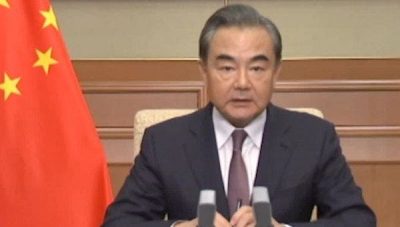
Chinese Foreign Minister Wang Yi recently claimed that his country mediated between India and Pakistan during last spring’s clashes, but it’s very difficult to believe that this actually happened. Trump has repeatedly claimed the same despite India’s denials, which greatly contributed to the deterioration of their ties over the past year. India’s half-century-long position since the 1972 Simla Agreement has been that its problems with Pakistan are bilateral, ergo why it’s always rejected mediation since then.
中文, देवनागरी, Urdu, Русский, Español, Portugues, Français, عربي, Hebrew, Deutsch, Farsi, Italiano, 日本語, 한국어, Türkçe, Српски. And 40 more languages.
Nevertheless, India cannot prevent other countries’ representatives from talking to Pakistan during bilateral crises, nor will it decline their calls after they’ve done so. Rather, it considers each pair of calls to be purely bilateral, and it’s always eager to share its perspective with them amidst regional tensions. After all, it would be a dereliction of its officials’ duty to voluntary cede the narrative to Pakistan, ergo why they’ll always take the opportunity to advance their country’s national interests during these times.
This background helps to better understand what China might have actually done last spring. Wang did indeed call his Pakistani counterpart Ishaq Dar and Indian National Security Advisor Ajit Doval on the same day, but as explained above, this wouldn’t have amounted to mediation. China is uniquely unqualified to mediate between them anyhow since it has territorial disputes with India and arms Pakistan to the teeth. Some of this equipment like the JF-17s was also used against India last spring.
That said, perhaps Wang truly believes that his talks with those two played a role in the ceasefire that followed, but it’s still curious that he waited over half a year to claim that China played a mediation role. He’d also know by now how furious Trump’s claim made India and the role that it played in the deterioration of their relation over the past year. It’s therefore unclear why he’d risk dealing damage to the nascent Sino-Indo rapprochement partially brought about by the US’ aforesaid problems with India.
The context within which he made this claim helps explain his possible motive. He was speaking at a symposium titled “International Situation and China’s Foreign Relations” and was listing off examples of the “Chinese approach to settling hotspots.” The other examples included “northern Myanmar, the Iranian nuclear issue…the issues between Palestine and Israel, and the recent conflict between Cambodia and Thailand.” The only one that it can indisputably claim credit for is northern Myanmar.
The other four are Trump’s claimed achievements, though China has veritably tried mediating between Cambodia and Thailand but failed to get them to agree to a deal. In any case, the only cogent reason why Wang would portray all the others as examples of Chinese mediation even though it arguably didn’t play any such role in those conflicts is to promote China’s Global Security Initiative, one of President Xi Jinping’s flagship initiatives. The others concern development, civilization, and governance.
Wang seemingly calculated, whether rightly or wrongly, that promoting China’s Global Security Initiative at this specific moment in the global systemic transition is so important that it’s worth offending India. That’s the only explanation that makes sense, especially since he waited over half a year to make this claim and did so during an end-of-the-year diplomatic review, but this doesn’t mean that India will be understanding about it and his boast could still needlessly complicate their nascent rapprochement.
*
Click the share button below to email/forward this article. Follow us on Instagram and X and subscribe to our Telegram Channel. Feel free to repost Global Research articles with proper attribution.
This article was originally published on the author’s Substack.
Andrew Korybko is an American Moscow-based political analyst specializing in the relationship between the US strategy in Afro-Eurasia, China’s One Belt One Road global vision of New Silk Road connectivity, and Hybrid Warfare. He is a regular contributor to Global Research.
Featured image: Foreign Affairs Minister Wang Yi, July 17, 2020. | Photo: Xinhua
Global Research is a reader-funded media. We do not accept any funding from corporations or governments. Help us stay afloat. Click the image below to make a one-time or recurring donation.










.jpg)





 French (CA)